Thursday, August 7, 2014

"The Newsroom" Pitches An Inspiring Angle


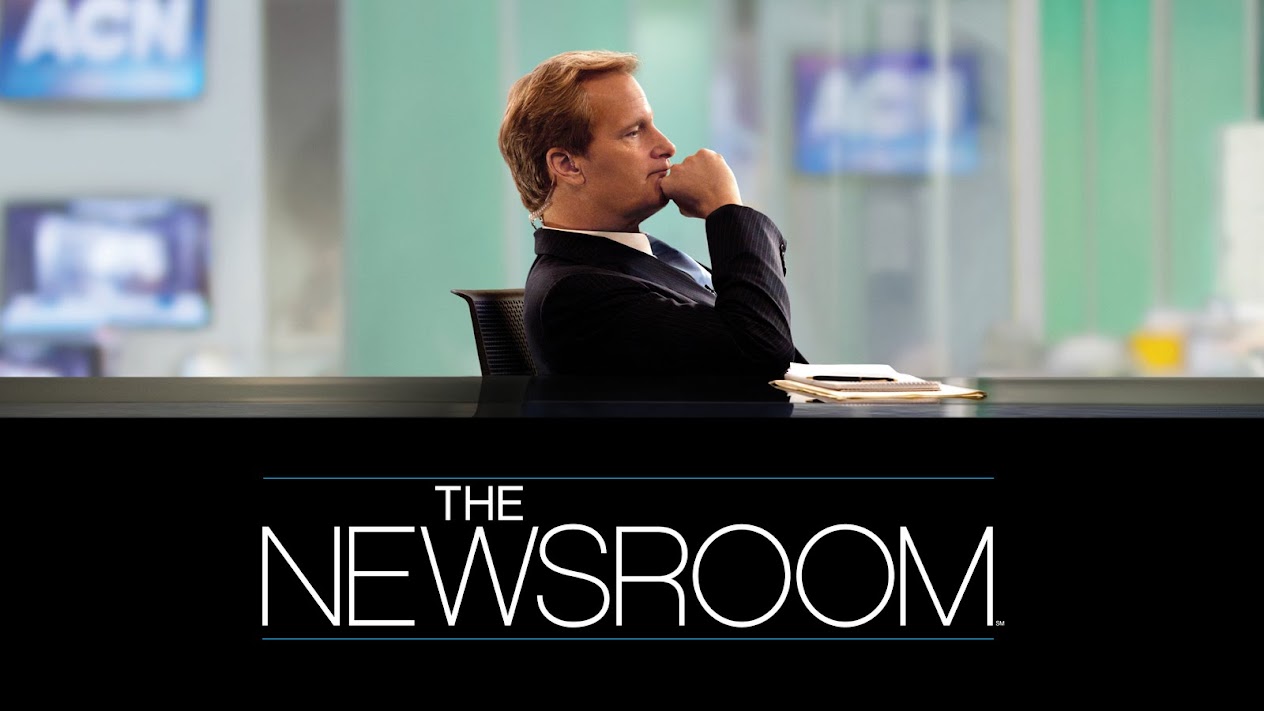
I don't watch the news, and I'm not sure Aaron Sorkin does either, but I like what he's been reporting on HBO these days.  His offering, an hour-length TV drama, follows the journey of Will McAvoy (Jeff Daniels) and Mackenzie McHale (Emily Mortimer) as they attempt to make personal and journalistic integrity the center of their nightly news show.  With a characteristic cast of choleric, charasmatic newscasters, Sorkin tells an idealistic story that, in the end, is less about the news and more about modern-day challenges of integrity.  While its politics vacillate between delightful incisiveness and patchy melodrama, its real heart is in its well-portrayed core cast and the optimistic perspectives of its author.


Aaron Sorkin is a TV-writing legend, mostly because of The West Wing, which he wrote for four seasons before it was passed on.   He also wrote "The Social Network", a film about Mark Zuckerberg and the creation of facebook.  His writing is characterized as fast-paced, wordy, and intelligent, and he is so popular among theater and film practitioners that words like "Sorkinesque" exist and are used with frequency.  I knew what they meant before I had seen anything the man had written.  So that's cool, and of course begs the question of The Newsroom's place in his oeuvre and in the newly-exploding television medium.  Is this the peaking triumph of his career?  Is it a sold-out side dish to his better stuff?  Sadly as I have not watched The West Wing (I've gotta finish Galactica, which I have been working on for two years) I'll have to tell you some of that later.

The show is really quite fun to watch.  Shot in the hustle-and-bustle of a spic-and-span newsroom, the show focuses on the enjoyment of watching people do what they're good at.  Jeff Daniels as McAvoy is a bitter hero, an anchor who has suffered for his honesty and for his temper, and who now begins a "mission to civilize" at the behest of his ex-girlfriend, who now is also his executive producer, a clumsy and emotional idealist played by Emily Mortimer.  She's a fantastic actress, and though she's a little underwritten, her relationship with Will is believable and a great through-line for the series.


The greatest strength of the Newsroom's cast, however, is its young people.  Jim Harper is the new kid on the block but takes charge immediately, and John Gallagher, Jr. is the kind of guy you want to trust as your peer and your boss, devoid of ambition but full of passion.  He develops feelings for Maggie, a frenetic, hilarious associate producer played by Alison Pill with exactly the right balance of timidity and courage.  Their furtive-glances-but-she's-got-a-boyfriend relationship is what TV is made for, allowing the audience to groan over how good they are for each other and how much tension is building up.

The other characters create a dynamic team: Maggie's temperamental boyfriend Don (Thomas Sadoski) provides inner conflict and impatience, while Neelamani Sampat (Dev Patel) is stereotypically tech-savvy and nerdy but as a fully-fledged human being, emotionally clear-thinking and a faithful friend.  Olivia Munn's economics expert Sloan Sabbath provides humor as a total bombshell who thinks more about the debt ceiling than about human feelings.  The other supporting characters, while well-written and performed, pale by comparison with the young people, whose aspirations drive the whole show.


The story is patchy, sadly.  Most episodes attempt to pair personal ethical problems with news stories, for example an episode about the Tea Party and lying on television mirrors the news story with questions about personal honesty.  At best, these episodes can be smoothly built, aerodynamic, and a rush to watch.  At worst, they seem heavy-handed and one-sided.  (Sorkin's McAvoy is apparently a card-carrying Republican but spends most of the show throwing stones at his brethren, and it gets a little old even to this moderately-minded observer) Still, with the snippy dialogue and strong throughline stories, the show's flaws come across as forgivable.

We live in an era of anti-heroes, and The Newsroom can look silly in that light.  Maggie and Jim wouldn't last ten minutes in Westeros, and Walter White wouldn't give them a second look.  There are no hidden dead bodies, no decapitations, and I was shocked to have finished half the season of this HBO series without any exploitative sexuality and barely any innuendo.  Sure, there are F-words aplenty, but they are for emphasis, not cruelty.  In terms of content, the existence and relative success of The Newsroom is a marvel.


My conclusions about The Newsroom are not about politics; they are about people.  Sorkin presents and believes in a good world full of good people trying to do their best.  Each of the individuals he presents deserve to be loved by people who understand them.  They make mistakes that are less related to crime and more to emotional oversight or unkindness.  This is a light that I am happy to see myself in.

In my review of Star Trek: Into Darkness I praised the idea of having a crew, how if we want to change the world, we must work alongside our friends.  Sorkin, I think, realizes how much television and stories in general are life-fuel for people, and that messages like this can inspire us.  He knows that somewhere watching, there is a young woman who might eventually be president, a young man who might eventually be a news anchor, and a multitude of people who already live in a world where moral decisions are made and moral consequences exist.  The Newsroom reminds us that integrity is a fight worth fighting.

The fact that cynical critics pan outright optimism does not kill its benefits.  It's A Wonderful Life was called "Capra-corn" and my father hates it, but it still inspires me to serve other people and live a selfless life when me and my mom watch it on Christmas eve at 1 a.m.  I believe that life is a fight worth fighting, and I appreciate art that reminds us of our moral agency in it.  And as a character on the show states, if that term is too vague for you, look it up.  Then watch The Newsroom, then go be a good influence in the world.

Not necessarily in that order.


Friday, May 30, 2014

Godzilla, Science Fiction, and Polymaths


I saw "Godzilla" on Memorial Day.


It was pretty cool, I suppose.  Lemme give you the rundown.

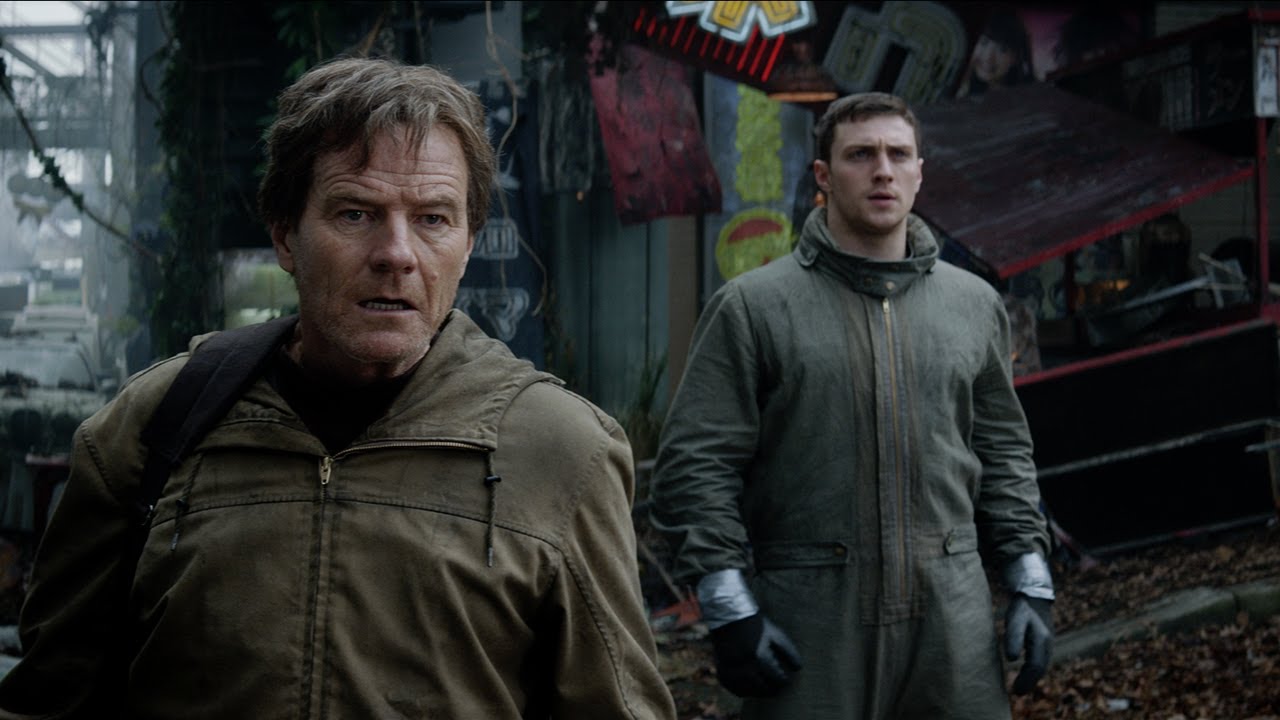
Scientist Bryan Cranston and stuff-nasal-voiced hunk Aaron Taylor-Johnson are sad because BC's wife died in a suspicious prologue.  They have to overcome their father-son issues, I think, which involve dad being the kind of scientist who (loud sigh) posts newspaper articles on the wall.  "I know, it's the worst idiosyncrasy, but the only way to respect your mother's memory is by becoming a conspiracy theorist."

Then for plot reasons, there are huge.  huge.  monsters.  Partially I don't like them because none of them are Mothra, Ghidorah, or Gigan.  Then Godzilla shows up, more like an afterthought than a built-up, meaningful Second Coming, and fights them.  And then there is destruction and smoke and fog and a lot of staring at intense stuff, and then the monsters are gone and the movie's over.  Seriously, done deal.

I loved these films as a child largely because of the monsters and largely because I was a child.  I know that I am using a much less appeasable instrument (adult brain) and comparing it to distractable ten year old brain, but I watched half an hour of "Ghidorah: The Three-Headed Monster" on Netflix and enjoyed that much of it Way more than this new, apparently good reboot.


The new reboot is not good.  Trying to find the flaws in Godzilla is not hard.  The problem, in fact, is listing them.  The film is more about being a reboot than anything related to monsters or Japan or even Bryan Cranston.  It relishes in greyscale.  It refutes campiness by resorting to a tone of unending dreariness, so much so that Ken Wanatabe was payed (hopefully) a million or so to STAND LOOKING OUT AT THE WATER WITH WORLD-WEARY WORRY.  He probably has six lines, one of which is the obligatory (never happy) only sighting of the world "Godzilla".  The monsters fights are mostly skipped over, as if saving us from the experience we paid money to see.  Pacific Rim was thirty times more fun and even if the writing was campier I actually enjoyed the freakin movie.

I'm just gonna stop reviewing the movie right now and tell you what's up, and this is actually what this post is going to be about: Movies are doing fantasy and science fiction wrong.

I repeat: They're doing science fiction and fantasy the wrong way.  "Why do you say that?" you ask, adorably naive reader, "There are sf & f movies all over the place?  All these comic book movies, not to mention all of the adaptations of children's lit like Hunger Games and Divergent, plus The Lord of the Rings and The Hobbit and everything else that's been engendered by it!" You're right, they exist, and some have been nice, but most aren't right.

Science fiction is a place to explore new ideas.  You would be shocked to know how many incredible inventions and ideas of today can be traced back to a few writers.  William Gibson's "Neuromancer" is theorized to have played a key role in the invention and development of the internet.  Neal Stephenson's novels have never been smarter or cleverer commentary on culture and technology.  And fantasy is no exception.  Where science fiction makes science into magic, fantasy makes magic into emotional reality.  Great fantasy writers like China Mieville, Neil Gaiman, and others allow us to see the world in splending, colorful new ways.

The entertainment machine, the hydra with such recognizable heads as Disney, Legendary Pictures, and HBO, has seen half of this world--they have seen the money.  They've seen nerdy boys apprenticed by their fathers in the way of science fiction, given books that change them.  They've seen how these nerdy boys spend money--lots of money--buying more books, or games, or comics, or whatever.  It inspires something in them, and inspiration, as we all know, means box office sales!

But it also means reduction, which is our first (1st) problem.  "Yes, we can make movies with spaceships and dragons and robots and all the things you want, but they're going to be movies.  Action movies, with lots of explosions and enough drums and percussion so no one gets bored or has to think too much.  Delving with issues or figuring out themes that matter is for dramas.  Except those will probably just be more about sex or murder."

So that's obvious.  I'm not saying anything new, just complaining about the commercialism of film.  Obviously they are trying to entertain.  Or I should say "we", as I am also a professional in this business at least to a degree.  Entertainment is important, and selling tickets is important, and though people are not as foolish as to simply want explosions and violence, they also aren't looking to read some new philosophical manifesto every time they walk into a theater.

So our second (2nd) problem isn't related to money.  It's related to the entertainment industry and specialization.

Specialization is an old time-honored thing.  You want to do something, like be a film director.  You get training, whether it be from Obi-Wan Kenobi or from a university or both.  Then you are qualified to a degree and join the ranks of people who have specialized.  Other people, who have not had the training and are thus not a part of the community, simply are not a part of it because they don't have the specialized skills.  They're not "special" in the right ways.

This system has worked for a long time, and is failing us now.  Why?  There are lots of people who want to do entertainment.  Lots of people want to be film directors and writers and actors, and so it's hard to know who to trust.  Walk down the street in NY and ask for a raise of hands "Who's an actor?" You'll get a lot.  Even though you're weird for asking for a raise of hands in public.

So now, instead of just specializing, we network.  Afraid of unknown quantities, communities of artists become centralized, trusting certain people and working with them.  This works great for many individuals and many communities--people get to work with people they like again and again, and they can feel comfortable and safe in their careers.  Entertainment can be especially scary, so it feels very safe to have a group of friends who are also co-workers in a sense.

But This.  Hurts.  Art.  There are diverse individuals in different communities who could work well with each other.  It's amazing to me that a mind like Neil Gaiman's and a mind like Christopher Nolan's have never met up and done a project.  It's far more likely that director Guillermo del Toro will turn to some friend from college to co-write his screenplay than to call up China Mieville, who would be an incredible match.  There are science fiction and fantasy authors out there capable of writing incredible films.  It's not like there are no good writers and we Have to turn to some doofus to write the screenplay for Godzilla.  Get a real writer to do the science fiction, and Max can put it in screenplay format.  I mean, the science used in Godzilla is at about the seventh-grade level.  The big reveal of the movie revolves around the idea of ECHOLOCATION.  I knew what that word meant in second grade, and I knew it related to bats and communication.  Who pooped out this screenplay?  Yeah, the formatter doofus.

The world values polymaths (Renaissance Men, people who are experts at many things), and so we all want to be them.  Joss Whedon is an inspiration to lots of people because he has roots in SF & F but makes great movies and writes great dialogue and also writes music, why not.  And so everyone wants to be him.  Every young director wants to write and direct, and hopefully star in his movies.  But being a polymath is not a matter of ego.  When it is, you often make crappy movies.

Being a polymath is a matter of being abso-freakin-lutely insane.  Polymaths are obsessive.  They are nerdy and often socially difficult.  They work their butts off day and night to keep up with the things they are good at.  Sometimes they might pick up new skills, but it's never without effort or work.  It's because they are willing to put in the time an really do it right.  There are incredible people, but "just being you" doesn't qualify you.  Even if you are hardworking or talented, it doesn't qualify you.

But heck, don't worry about that.  Polymaths are not the solution to bad movies, or bad science fiction and fantasy.  The solution is people doing what they're good at.  It's really seeking to make good art, even when we have to put aside working with our friends or the people we like, or getting the most money for it.  I think that really, really matters.  And even if he can't always tell the difference, I think ten-year-old Ted does too.


Monday, April 21, 2014

Surviving and Not Much Else In '12 Years A Slave'

In her review of '12 Years A Slave', Roxane Gay said: "I am worn out by slavery and struggle narratives.  I am worn out by broken black bodies and the broken black spirit somehow persevering in the face of overwhelming and impossible circumstance." Despite the incredible praise that has been lavished on "12 Years a Slave", Gay and other reviewers bemoaned that the film is rehashing another version of the same tale, packaged for Hollywood audiences in yet another way.  I have sometimes felt the same things about "historical suffering" pieces.

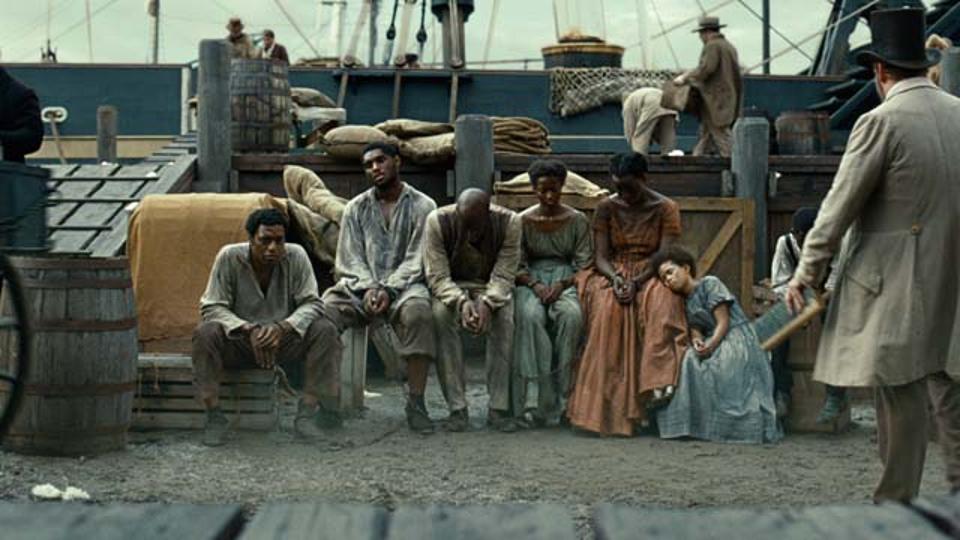
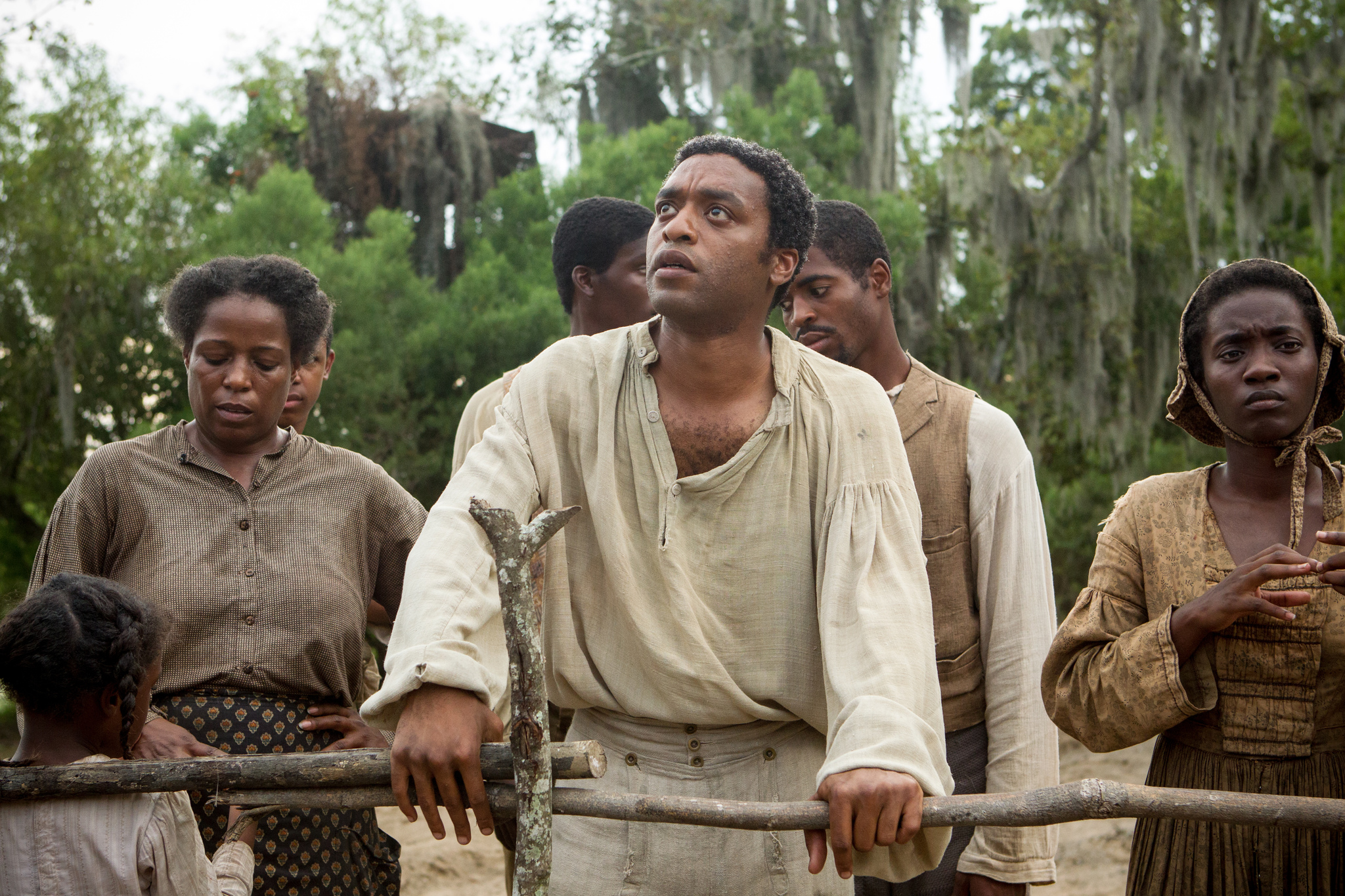
So I came into '12 Years a Slave' looking for something other than guilt and sadness.  I came looking, perhaps selfishly, for strong performances by actors, and for elegant writing.  I found both.  Chiwetel Ejiofor plays Solomon Northup, a free black man from the North who falls in among the untrustworthy, finds himself abducted and sold, and spends (obviously) a dozen years as the property of a lineup of southern white men.  In his performance and in the screenplay, I found not just what I was looking for, but also some questions about human beings that I think elevate the film above melodrama and into the realm of art.


Human beings are all anyone encounters in John Ridley's screenplay, and they come in many shapes.  Solomon's first hawker, a well-dress Paul Giamatti, tells his customer (Solomon's future owner Ford, played by Benedict Cumberbatch) "my sentimentality extends the length of a coin." Overseer Tibeats, played by Paul Dano, commands a new batch of slaves to clap for him on their first day as he sings a demeaning song about runaway slaves.  In a chilling scene, a black woman who has gained a life of relative ease by marrying the white plantation owner who loved her invites Solomon to sit for tea and reflects eloquently on the world she lives in: "If [enduring Master Shaw's pantomime of fidelity is] what keep me from the cotton pickin' niggers, that's what it is to be.  A small and reasonable price to be paid for sure."

Like almost everyone in the film, these characters are survivors.  Slaves "say and do as little as possible" to avoid the whip or the noose, guilty slave owners must pay their debts, and the others scrape out their living where they can in the established system.  Only Solomon seems to dream of something else, proclaiming: "I don't want to survive.  I want to live."


But as the film shows us, living is barely an option.  I rejoiced vocally when Solomon stole the whip from Tibeats and made him scream with whipping, and even breathed a sigh of relief when another overseer told Solomon that he would protect him, but the subsequent moments left Solomon hanging by his neck from a branch, his feet barely touching the ground and keeping him from death.  In an agonizing long shot slaves and slave owners alike ignored the hanging man, save one girl who brought him a sip of water and hurried away.

It is in this and other scenes like this that slavery can be understood as it truly was--a monster of civilization, nearly indestructible and impossible to fight.


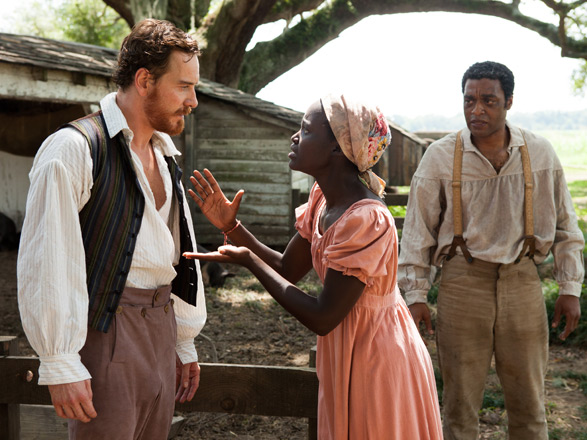
Praise is deserved for the many actors who contribute to this.  Cumberbatch's Master Ford barely has four scenes, but his rich voice and manner embody the period and the kind of goodness that men like Ford offered--scripture, attempts at justice, protection, but in the end not much else.  Dano's Tibeats is despicable, sniveling, and hateable.  What a sad career that guy is having.  And it's impossible to forget Michael Fassbender's wild, egomaniacal Epps, a lusty, boozing farmer.  Fassbender plays him as part Nazi, part Shakespeare villain, reduced to nothing but desperate selfishness.

Solomon is a treat to watch.  Ridley's text is heightened like Arthur Miller's Crucible, and no one gets it right quite like Mr. Ejiofor.  His performance is at times so subtle as to almost disappear, but when the fire burns, it burns, and it's hard to take one's eyes off him.  Lupita Nyong'o plays Patsey, Epps' concubine and the best cotton-picker on his plantation.  Ebony-skinned, with wide eyes that rarely look at anyone, Patsey is a pathetic symbol of the race--hopeless, meaningless, making dolls out of grass and fighting the most desperately when it comes down to a bar of soap, as she screams at Epps: "I stink so bad I make myself gag!"


For those who saw the trailer and Solomon's vigorous declaration: "I will not fall into despair!" This statement is tragic.  Despair is much of the film's purpose, and by the end the words echoing in my ears were not Solomon's wife's final comfort but instead Epps' wrathful cry in Northup's ear: "I own you!  I own you!" In the end, Solomon Northup survives more than he lives, and we can hardly ask ourselves why after such a display of brutality and evil.

One of my favorite moments takes place at a graveside.  A slave fell dead that afternoon picking cotton, and at the funeral a woman begins to sing "Roll, Jordan Roll".  As the others sing around him, Solomon begins to sing in a pleading, anguished bass voice: "Roll, Jordan, roll--my soul arise in heaven, Lord, for the year that Jordan roll."


But as the film shows in Solomon's many scenes of playing the fiddle as a slave, and in contrast to many Hollywood approaches to racism, music is not life.  Slavery was the birth of the music that shaped America, but like Solomon whipping Tibeats, this kind of music is still protest more than rejoicing.

The lash-marks of slavery may not be much felt in the nation's politics now, but it seems from my limited perspective that they are still felt in the people.  Other non-whites still feel more comfortable than blacks in many aspects of American society.  Black music may dominate above most others, but what about their lives?  Are they (and people of all races) still trying just to survive?  Have we forgotten that we can live?  Are the words of the devil and other men, screaming "I own you!" still ringing in our ears?

I am still digesting '12 Years a Slave'.  I imagine I will for a few more weeks, and I think I will think of it often for many years.  The adage says we are doomed to repeat history if we do not know it, and I think 12 Years a Slave has taught me enough that I will refuse to be powerless.  But goodness gracious, I'm glad that at least some of that is over.

Sunday, April 20, 2014

Prophet Can't Catch A Break

It's a tough life in the Old Testament.  Anyone who knows the Sunday School stories has already encountered more than a dozen morally ambiguous, complex stories about God's relationship with man, from a questionably foreplanned Fall from Grace in a garden, to the first child killing his brother in a jealous rage, to a tragic fall with a righteous king watching a woman bathing...

It just gets worse.  The Bible is difficult literature for anybody, spic-and-spanned as it may be by parents attempting to teach their children moral lessons that let them be strong in a complex world.  Noble as this often is, seeing the story in some of its darker, more original light can be useful. "Noah" as told by Darren Aronofsky, is a challenging tale because it does not affirm faith, it tests faith, and the result is a stressful, gasping film that explores the dark side of devoted monotheism.


From the beginning, it is clear that this Prophet is not the one we imagined.  The earth of Aronofsky's Pre-Deluge imagination has been industrialized into black soot and tree stumps, and Noah and his family live off of lichens and herbs.  Black-clad barbarians roam the land, killing animals and men at will; it is Noah's particular virtue that he refuses to kill or eat animals.

The environmental message is a perfectly reasonable interpretation of the story, but strikes a strange chord.  In the first two minutes we have seen him as an adult, he chides his boy for picking a flower and seconds later has killed three men who were hunting an animal.  I don't think even the vegans in the audience would cheer at such a display.  The journey that Noah goes through takes him even deeper into hatred of humankind, but I think seeing tenderness from the man would make us feel more for the awful crucible he goes through.


The rest comes as we're familiar with it.  While staying in the wilderness, Noah has a dream.  He sees rain falling from the sky and making plants out of nothing.  He finds himself in water, surrounded by floating, dying bodies.  The imagery in these dreams is gorgeous--in ways, it is the most fascinating portrayal of divine communication we've seen in film for a long time.  God does not say words, but Noah understands, and his wife (played by Jennifer Connelly) is willing to believe.

The film balances between Biblical accuracy and Kabbalistic reinterpretations, and while audiences will be thrown off by the arachnoid rock-angels, everything else in this story is a part of the world created for it.  I felt drawn into the world, separated from the incredible evil of humanity, where women are traded for meat and Russell Crowe looks down to find blood in the soil between his toes.  It is disturbing, terrifying, and stressful.  One particular image, where the family sits in the ark listening to the screams of a thousand people trying to hold onto an outcropping of rock, is reminiscent of a Gustav Dore illustration of Dante's inferno.

For a devoted Mormon, Noah brought up a question I didn't expect to find here: "Is it worth it?"

Is it worth to try and follow this God?  He demands everything--for Noah and his family, they lived on almost nothing.  A life of depriving oneself of what is normal for everyone else--for Aronofsky, a life without meat and industrialism, and for Mormons it might be those things as well as pre-marital sex, booze, coffee(?!), and more.  Sometimes it is easy to live without these things, and sometimes one can really feel as abandoned and friendless as Noah and his family did.


'Noah' only very rarely gives us glimpses of hope--a miracle is followed by a passionate kiss between Ila (Emma Watson) and Shem.  Noah joining his wife to garden in the post-deluge world and their glances tell of the birth of something more than just new plants.  And the famous covenant symbol of God's--the rainbow--make a startling appearance.  Still, these things come at a cost, and many character bemoan not being able to hear or understand the voice of God.

Eventually, though, in my experience, we will.  Personally.  Individually.  Truthfully.  And Noah points out where these things can come from--from God, mostly, whether it be through a servant (Methuselah), through a child, through a new world.  It's easy to choose the short-term things to make us happy, as the wicked did in Noah's time, but in 'Noah', Aronofsky points out to us how much a prophet or even a person really has to do to earn it.

Hopefully, unlike Noah for most of the movie, we won't forget that happiness is a part of it all.

Tuesday, February 25, 2014

"Big River" Goes Through Rapids and Still Waters (Theatre Review)

In the middle of a dark, wet night, two men huddle on a raft in the Mississippi River.  One, a slave named Jim, curls a blanket around his shoulders, and a teenager named Huck sits, singing to himself, letting himself get drenched.

In the Hale Center Theater Orem's production of Big River, this image is brought to us uncluttered by choreography or overdramatic singing.  Not only that, it's enhanced by a silent, slouching Greek chorus on the sidelines--hat-wearing musicians strumming away at guitars, crooning on a violin, or making frog noises.


Director Christopher Clark has brought the piece to life in a way that remains fresh for its two hours traffic.  A small group of actors, all white except for two black characters, transform to fit Huck's episodic experiences. Sets and moods change as mutual efforts between the actors and the intimate space in the Hale Theatre--music, noises, and characters bloom out everywhere, like a swampy garden of strange-smelling flowers.

The cast consists almost completely of skilled multitaskers--musicians, character actors, singers, dancers, and creators of ambiance.  Under musical direction from Justin Bills (who clunks away with us at a disguised keyboard in a hat), the musicians seem (besides a few hiccups) to be completely in sync and in control.  Guitarist Kris Paries takes as many chances as he gets to shine, and Spencer Carter and Ben Parkes keep the show rolling with their consistent musicianship.  It's a bit of a gamble to try and have live instruments supporting microphoned singers, however, and at a few too many moments a certain inequality makes one party or the other seem overbloated, making a singer seem unsupported or a singing ensemble get swallowed up.

Great performances abound in this production.  The female ensemble gets less credit than it deserves, playing dogs, Western saloon girls, boys, and more, and giving some pretty specific life to every role they take on.  The men work hard as well, though it's clear that all their juggling of different roles has them a little confused at times (except for Spencer Carter, who creates four or five extremely specific characters who are so easy to distinguish that I breathed a sigh of relief when he appeared on stage.) Melanie McKay Cartwright sings beautifully as the underwritten Mary Jane.

Innovation runs through it

But the real star of the show is undoubtedly Jim, played by Conlon Bonner.  He first enters during the opener, setting up chairs and carrying umbrellas for Aunt Eller and the Widow Douglas, and though he doesn't say a word, he draws the eye more than anyone on stage.  Like a classic Disney character, his movement is specific, humorous, and energetic, and like great characters of any kind, there is a bloody, beating heart at the center of his performance.  Oh, and he's got a real pretty voice, too.

Andrew Robertson has just about a perfect look for Huckleberry, with a heroic face and the body of a boy ready for manhood but not quite there yet.  There's no overdoing it for Mr. Robertson, who narrates the play in a very understated manner, and whose singing is pleasant.

Sadly, his performance struggles from a problem that hangs over the whole production.  The Great American novel Huck Finn tells a pair of stories--one is about slavery and America, about injustice and pathos inside the heart of the simpleton slave Jim.  The other is about white people--lots of 'em.  Frontier folk making towns out of nothing, living in their own forms of abject poverty and stupidity.  But where Bonner's Jim is uneducated but soulful, the poor white folk on the shore of this big river are barely caricatures.  

This is thrown into even more contrast when some more real characters appear onstage.  In a violent, rowdy turn (did he say "bitches" on a Utah stage?) Daniel Fenton Anderson plays a mean Pap, who rails drunkenly at the government and then tries to kill his son with a shiv.  This whole sequence, however, seems pretty glossed over, and even if Pap is generally a despicable guy, he still seems to know that he's fallen far, saying "I hope you'll remember your father in a better time." The Duke and the King are rather vile men, but in moments where they audience should want to strangle them a lingering sense of comedy remains behind, and their full symbolic potential remains unlocked.

It seems that white people forget that privilege, middle-class-ness, and Christianity are not their birthright alone, and that brokenness, drunkenness, and self-justified evil are not the diseases of lesser peoples.  Huck's journey is not only a journey of shrugging off racism, it is one of understanding morality in general.  When Huck reaches up to the heavens and says "I have lived in the darkness for so long/I'm waiting for the light to shine", he's not thinking about slaves.  He's thinking about his own soul.  In a sense, this journey seemed never to surface, even though it really is the current that pushes the play along.

Perhaps another cousin of this weakness comes in the performance of the music.  It is impressive, without a doubt--the whole show is a darn masterful accomplishment for community theatre--but much of the music lacks energy.  The overture seems less like a river and more like an algae-ridden pond, beautiful, serene, and quiet.  The few pieces that really drive and lift the audience come from the black characters.  But looking into any sort of impoverished population, one finds how important music becomes as entertainment and sociality.  I ached for some foot-stomping, some rowdy shouting, and some passion in the score, but much of it involved some very serene-looking musicians standing quietly swaying in the corners.  (Thought it should be noted that I saw a Monday night performance.  Who knows what it looks like on Friday nights?) 

Still, these complaints are asking for perfection when all the reviewer saw was pretty excellent.  I commend the cast and crew of Big River on an enjoyable evening, and obviously one that made me think a lot.  And for those of you reading, go see it.  We can't expect our innovative theatre to thrive if we don't support it.

Thursday, February 13, 2014

"The LEGO Movie" Kinda A Dream Come True

The LEGO Movie is, at a one billion times scale, a bit like the movies I used to try to make as a kid with a stop-motion camera and a bunch of Legos.  From the first moment when a camera soars through a lava-filled chasm, the dreaming adults feel a tugging awe, and the film never lets go.


With a mix of real stop-motion animations and CG, every environment and character brings us into a layered world.  Even with a brief, trippy journey to the human world, the LEGO movie needs no introduction.  The characters live in their own universe.  The shiny cities, castled landscapes, and vast deserts live on their own, evocative and beautiful.

Still, signs of humanity still exist--a villain threatens a minion with the "Cloak of Band-A'yd", a relic we recognize immediately.  In a delicate touch, when the light hits the characters right one sees fingerprint marks on them, as if the game is being played for us to watch, in the detail children wish could happen.


The story follows Emmett (Chris Pratt), a totally normal, enthusiastic LEGO man.  His morning routine says everything about him.  Emmett follows all the instructions given by President Business (a well-coiffed Big Brother figure voiced by Will Ferrell) which tell him how to dress, how to act, and how to work.

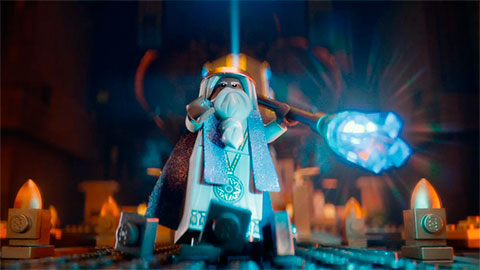
The lifestyle of the LEGOS in Bricksburg, while exhilarating and fun to watch with its pop music, coffee, and colorful characters, is clearly degrading to Emmett.  But the prologue with the wizard Vetruvius and the Evil Lord Business has already told us what was gonna happen.

Emmett finds a mysterious relic designed to save the world from destruction at the hands of Lord Business, who wants to freeze everything in an aesthetically pleasing position forever, so that the world can conform to his way of seeing things.  (You seeing a theme here?)


So Emmett has to be rescued by the Master Builders, who have escaped Lord Business' fascism and live in the cracks of the Lego universe.  Even though he is a totally uncreative goof, they join in an epic quest to take down Lord Business and allow everyone in the world to do what they want: build cool stuff without following directions.

Great performances abound.  Chris Pratt can do little wrong with the silly, improvising Emmett.  Elizabeth Banks gives sass and emotion to a pretty underwritten love interest.  Will Arnett makes fun of everything he can as Batman.  Liam Neeson kicks butt as Bad Cop.

Still, no set piece or amazing lego set or fight scene can hold a candle to Morgan Freeman as Vetruvius.  As a pastiched Gandalf figure, the white-haired wizard consistently delivers the films most unexpected, hilarious quips.  Morgan Freeman can jump from delivering deep thematic wisdom in his chocolatey voice to making silly ghost noises or saying something like "I know that sounds like a cat poster, but it's true" without a sense of embarrasment or missing a beat.  It seriously, no joke, I mean I really mean it (but for reals), is my favorite performance he has ever given.


The film has already been praised for its non-conformist, anti-business message.  When WildStyle, one of Emmett's rescuers, learns that he listens to popular music, she is plunged into deep disappointment.  How could he be such a conformist?  The next message, surely, is how to show Emmett what good music and culture are.  But she never does, and when Batman shows Emmett some of his "real music," it turns out to be just as stupid as Lord Business' heavily-produced stuff.

And the non-conformist characters are often portrayed as being just as silly as Emmett.  A Uni-Kitty from Cloud Cuckooland shows Emmett her kingdom of rainbows and candy, warning that there is no sadness, no negativity, no bad in her land.  WildStyle points out astutely that Uni-Kitty's mantra is full of the word "no".  And when Emmett suggests his one original idea, Vetruvius states firmly that "that idea...is just the worst." According to the LEGO movie, bad ideas are bad ideas.  Period.  Praising non-conformity for its own sake has no value.

Of course, in the end, the film praises originality: do the best that you can do, and it will be good enough.  Nowhere is this more awesome than with Benny, the 1980's space guy, who after trying to make a spaceship the whole movie, finally makes one and flies around ecstatic, shouting "spaceship" for like two minutes.


And this is basically the right message for the Lego movie.  We all know the conflicts that come up playing with Legos.  Someone wants to make a spaceship.  Someone wants to just follow the directions.  Someone wants to work only in black (and very very dark grey).  Someone wants to make a rainbow kingdom, and someone just makes dumb stuff.  The point is that it's better to do things together, play together.  The great victory of the characters of the LEGO movie is not when they fight Lord Business, but when they all work together and make somethings--by common consent.

Let's admit it.  This is a commercial, but it's trying to point out the best things about LEGOS.  Not that they're retro, or cool, or non-conformist, but that they're fun, and even cooler when you're part of a team.

Thursday, December 26, 2013

Despite All the Glitter, "Smaug" Breathes Real Fire

I wrote last year about Peter Jackson's first installment of his turned-trilogy adaptation of Tolkien's hardly-masterwork, The Hobbit.  Reminiscent and yet cartoonish, thoughtful and yet embarrassingly brainless, the work seemed like a confused story from someone's family history.  Its sequel, "The Desolation of Smaug" comes across somewhat similarly.  As I saw it on Christmas day and I was thinking of food, I discovered that "Desolation" consists of a delicious, perfectly roasted Christmas turkey, into which has been stuffed thirty-five unwrapped Hershey's chocolate bars. There's enough there to chew on without the dessert already inside.


In short, even though the Hobbit's showing-off is as excessive as Gandalf's fireworks, the saga continues to live on with beautiful emotional fire, thanks to a good deal of love and respect for J.R.R. Tolkien, though the torch-carrying facebook mobs moan otherwise.

A problem is that much of it is puppy love--a sort of adolescent "Wow!" like a kid destroying his father's meticulous train set.  Peter Jackson throws us a few absolutely ridiculous bits: a twenty-minute barrel-ride, a silly magistrate-with-a-combover side story, a trippy Sauron flashback complete with lava lamp animations, and some dialogue and scenes that are just plain stupid.  Parts could easily turn into a drinking game: How many orc heads will roll?  How many times will Legolas slide across the screen like a tobogganer?  How many times will Peter Jackson try to make us believe that Bard and Thorin are as cool as Aragorn?

In other moments, however, the love for Tolkien seems like it is walking hand in hand with the Old Master himself, bushy-eyebrowed and weird and wise.  One can imagine Tolkien pointing out the potential allegories here, laughing at a few little moments that bring churning blood and changing soul to The Hobbit.  


Nowhere would he be prouder, I think, than with Martin Freeman's Bilbo.  Bilbo doesn't get enough screen time in this film, and yet he dominates as the scurrying, scheming, steel-hearted would-be burglar.  He tells the great dragon near the end of this film's journey "I am he that walks unseen." Watching Bilbo come to his own, two parts burglar and one part hero, is the most compelling journey of the film.

Freeman finds time, in a movie obsessed with cutting orc's heads off, for wordless soliloquies that express more than some characters do with speeches of babbling.  His relationship with the ring is only mentioned once on screen, but every time it appears we know what it costs him to use it again.  Because of Bilbo, a morality finds its way back in to a powerfully moral world which, if Peter Jackson's boyish side were left unchecked, might have disappeared entirely.


There are others to thank for the film's real emotion and beauty.  Peter is actually one of them.  His invented romance between Kili (the one dwarf who, looking at, you would legitimately consider dating) and the wood elf captain Tauriel flavors the story with a relief we need.  Played by Evangelline Lilly, who here secures my embarrassing and eternal devotion, Tauriel is a soulful addition to a world that benefits from her presence.  A few moments of their romance are silly, but one scene in the prison shows us the reason we believed that Peter Jackson could bring this world to life.  The wistful Tauriel sighs to Kili, who complains that the light of the stars seems cold and remote:

"All light is sacred to the Eldar.  Woodland elves love best the light of the stars.  I have walked there sometimes, beyond the forests and into the night.  I have seen the world fall away and the white light of forever fill the air."


As fantasies often do, The Hobbit and The Lord of the Rings pit dark against light.  For writers who don't know what they're doing, it's easy.  "Oh, the light is the good guys and the dark is the bad guys." Scenes like this, however, and many moments of The Hobbit, attempt to explore what the "light" really is.  The quarreling races wish for different outcomes--Thranduil wants sanctity, Biblo security, the dwarves a homeland, the people of Laketown prosperity--and they fight over their different hopes.  The film calls for unity.  The message resounds in Tauriel's question: "Are we not part of this world?"

The other elf that steals the show is the arrogant, cold Thranduil, (father of pre-Weight-Watchers Legolas) played by Lee Pace.  The macho actor might have not seemed like the right choice at first, but his slithering, overconfident King slides into the world of The Lord of the Rings as naturally as Madame Blanchett as Galadriel, and five times better than Hugo Weaving.

And let's not forget the reason we came to the mountain in the first place--Smaug, the massive gold-hoarding dragon, voiced by the renowned Benedict Cumberbatch.  His scene with Bilbo is as iconic and well-written as the Smeagol-Bilbo scene in the first film, and in many ways it does not disappoint.  Bilbo's wordplay delights, and in terms of a visual feast it's a hard contest between the dragon and the actor.

The dragon stuns visually, bathing in that sea of gold or soaring or breaking things.  Sadly, despite Mr. Cumberbatch's best efforts, the post team went to town on his voice and left a grunting cacophany.  The classical actor's clever inflections and smirk are mostly lost, though if you're listening for them, you may find them.  His dialogue flips between the beauty of Tolkien--"my teeth are swords, my claws are spears, my wings are a hurricane"--and silly things bad villains shout "I am fire!  I am death!"  His conclusion, like other parts of the film, sacrifices meaning and character for tricks and trifles.


"The Hobbit: Desolation of Smaug" will not bowl over diehards or newbies, but it is another heartfelt and exciting installment in one of my favorite sagas ever.  Even if it isn't the great story about fighting against despair, it's a reminder of why we must stand together, and the kind of world it makes when we don't.